
-
Emergency Call+91 93107 20120
-
Mon - Sat8.00 AM - 08.00 PM
-
Sunday9.00 AM - 03.00 PM
EMG (Electromyography)
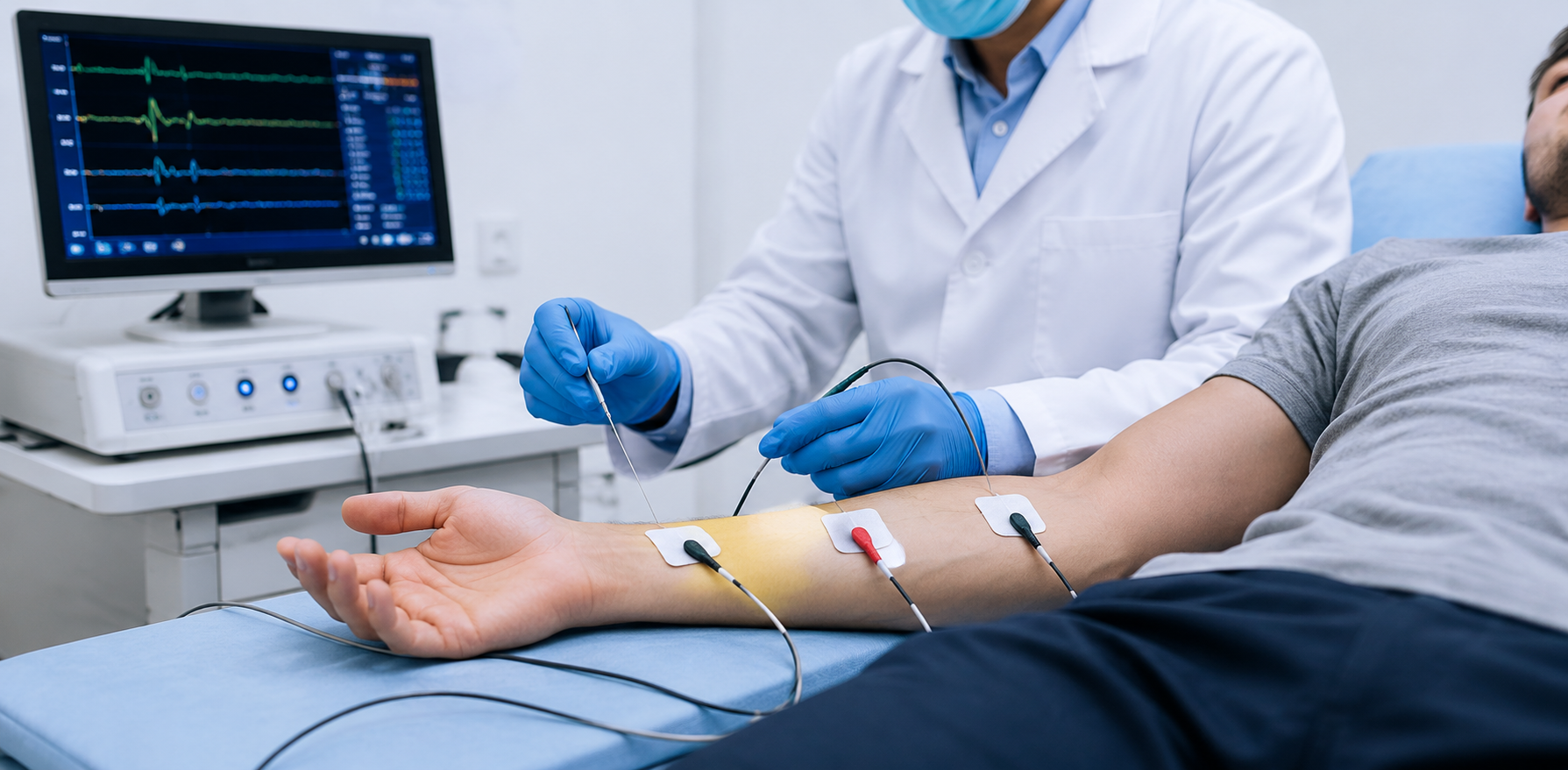
Electromyography (EMG) is a safe and effective diagnostic test used to evaluate the health of muscles and the nerves that control them. It records the electrical activity produced by muscles during rest and movement, helping doctors diagnose conditions affecting the muscles, peripheral nerves, and motor neurons.
What is EMG Used For?
EMG is commonly recommended to diagnose and assess a variety of neuromuscular disorders, including:
- Muscle Weakness
- Muscular Dystrophy
- Peripheral Neuropathy
- Carpal Tunnel Syndrome
- Pinched Nerves
- Sciatica
- Amyotrophic Lateral Sclerosis (ALS)
- Myasthenia Gravis
- Muscle Pain and Cramps
During an EMG test, a thin sterile needle electrode is gently inserted into selected muscles to measure their electrical activity. The signals are recorded and analyzed by a specialist to determine whether the muscles and nerves are functioning normally. EMG is often performed together with a Nerve Conduction Velocity (NCV) test to provide a comprehensive evaluation of nerve and muscle health, allowing for accurate diagnosis and treatment planning.